Two years after his death in February 2024, a European investigation reveals that Alexei Navalny was allegedly poisoned with epibatidine. This rare toxin, extracted from Ecuadorian poison dart frogs, causes paralysis and fatal respiratory failure. Five European countries accuse the Kremlin and refer the matter to the Organisation for the Prohibition of Chemical Weapons. This revelation recalls the 2020 precedent, when Navalny was poisoned with Novichok. The case crystallizes tensions between Russia and the West and raises questions about the effectiveness of international chemical weapons control mechanisms.
The death of Alexei Navalny, an emblematic figure of the Russian opposition, continues to generate intense diplomatic and political tensions. Two years after his death in February 2024 in a penal colony in the Russian Arctic, a joint investigation conducted by five European countries — the United Kingdom, France, Germany, Sweden, and the Netherlands — now claims that the opposition leader was poisoned with a rare toxin extracted from the skin of Ecuadorian poison dart frogs: epibatidine. This revelation, made public on February 15, 2026, on the sidelines of the Munich Security Conference, forcefully revives accusations against the Kremlin and recalls a previous poisoning attempt that had already targeted Navalny in 2020.
1. A coordinated announcement at the highest European level
According to a joint statement released during the Munich Security Conference, laboratory analyses conducted on samples taken from Alexei Navalny’s body “conclusively confirmed the presence of epibatidine,” a deadly toxin found in certain South American poison dart frogs. British authorities, joined by their French, German, Swedish, and Dutch counterparts, believe that this substance “most likely caused his death.”
France’s Minister for Europe and Foreign Affairs, Jean-Noël Barrot, denounced on the social network X the use of a “biological weapon” against a political opponent, paying tribute to a “figure of the opposition, killed for his fight in favor of a free and democratic Russia.” Meanwhile, British Home Secretary Yvette Cooper stated that “only the Russian government had the means, the motive, and the opportunity” to administer such a toxin during Navalny’s imprisonment.
The five states announced their intention to refer the matter to the Organisation for the Prohibition of Chemical Weapons (OPCW), considering it a “flagrant violation” of the Chemical Weapons Convention [8]. This move aims to frame the case within an international legal context and increase diplomatic pressure on Moscow.
2. Epibatidine: a rare and potent toxin
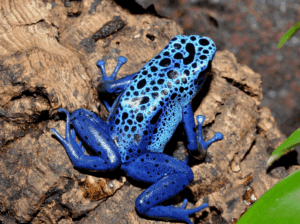
Epibatidine is a powerful alkaloid identified in the skin secretions of certain Ecuadorian poison dart frogs. Extremely toxic, the substance acts on nicotinic acetylcholine receptors and can cause severe paralysis, respiratory failure, and, in high doses, death. It does not occur naturally in Russia, European investigators emphasize, which they argue strengthens the theory of importation and deliberate use.
The sophistication of such a poison raises questions: its extraction, stabilization, and administration would require advanced scientific expertise and access to specialized supply channels. Western authorities believe that only state actors would possess the capabilities necessary to obtain and use such a toxin without leaving obvious traces.
3. Russia’s response: denials and accusations of “propaganda”
Moscow has firmly rejected these accusations. The official news agency TASS relayed statements from the spokesperson of the Russian Ministry of Foreign Affairs, who described the case as “propaganda.” The Russian Embassy in the United Kingdom denounced a “political staging,” comparing the accusations to those made in the Skripal case.
The Kremlin had already denied any responsibility for Navalny’s death in February 2024, when the penitentiary administration claimed that he had “felt unwell after a walk” before losing consciousness. Russian authorities had also refused for several days to return the body to his family, fueling suspicions of concealment.
4. A reminder of the precedent: the 2020 Novichok poisoning
The hypothesis of poisoning in 2024 must be viewed in light of a dramatic precedent. On August 20, 2020, Alexei Navalny fell seriously ill aboard a flight from Tomsk to Moscow. Hospitalized in Omsk, he was later transferred to Berlin, where analyses determined that he had been exposed to a nerve agent from the Novichok family, developed during the Soviet era.
In October 2020, the OPCW confirmed that Navalny’s blood and urine samples contained substances similar to nerve agents from the Novichok group—extremely powerful organophosphorus toxins developed in the Soviet period and banned under the Chemical Weapons Convention.
At the same time, a joint investigation conducted notably by the American media outlet CNN and the investigative collective Bellingcat implicated agents of the FSB, the Russian Federal Security Service. The investigation suggested the existence of a specialized unit dealing with nerve agents that had followed Navalny for several years.
Russian President Vladimir Putin denied any involvement at the time, declaring that if Russian services had wanted to kill the opposition leader, “they would have finished the job.” After several months of recovery in Germany, Navalny returned to Russia in January 2021, where he was immediately arrested and later sentenced to lengthy prison terms on charges he denounced as politically motivated.
5. A central figure of the opposition
A charismatic anti-corruption activist, Navalny had gradually established himself as one of the Kremlin’s main opponents. Through investigations published on social media and by organizing large-scale protests, he managed to mobilize a significant portion of Russian civil society, particularly younger urban generations.
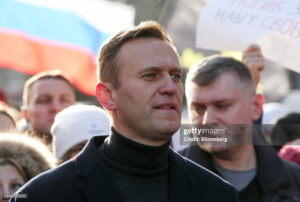 His widow, Yulia Navalnaya, has played a central role in denouncing the circumstances of his death. Present at the Munich Conference in 2024 and again in 2026, she stated that what she had claimed the day after his death—”Vladimir Putin killed my husband”—would now be “proven by science.”
6. A major geopolitical issue
If the theory of epibatidine poisoning were to be confirmed by independent international bodies, it would constitute a new escalation in the alleged use of chemical weapons against political opponents. Following the Novichok case in 2020, the hypothesis of a toxin derived from a South American amphibian would illustrate a troubling diversification of methods attributed to Russian services.
The Navalny case now extends beyond an individual tragedy: it crystallizes tensions between Russia and Western democracies against the backdrop of the war in Ukraine and the lasting deterioration of diplomatic relations. It also raises questions about the effectiveness of international mechanisms for controlling chemical weapons and the international community’s ability to sanction such violations.
Two years after his death, Alexei Navalny’s name remains at the heart of a political and symbolic confrontation. For his supporters, he embodies the price paid for defending a democratic Russia; for his detractors, he remains an instrument of Western interference. The investigation into the alleged use of a poison dart frog toxin merely adds another dimension to a case already heavy with history, controversy, and geopolitical rivalry.
7. Frequently asked questions
What is epibatidine and why is it dangerous?
Epibatidine is an extremely toxic alkaloid extracted from the skin secretions of certain Ecuadorian poison dart frogs. It acts on nicotinic acetylcholine receptors and causes severe paralysis, respiratory failure, and can lead to death. Its sophistication requires advanced scientific expertise for extraction, stabilization, and administration, which suggests the involvement of state actors according to European investigators.
Which countries participated in the investigation into Navalny’s death?
The joint investigation was conducted by five European countries: the United Kingdom, France, Germany, Sweden, and the Netherlands. These states coordinated their laboratory analyses on samples taken from Alexei Navalny’s body and jointly announced their findings during the Munich Security Conference on February 15, 2026, before referring the matter to the Organisation for the Prohibition of Chemical Weapons.
Had Alexei Navalny been a victim of poisoning before?
Yes, on August 20, 2020, Navalny was poisoned with Novichok, a nerve agent from the family of organophosphorus toxins developed during the Soviet era. After being hospitalized in Omsk and then transferred to Berlin, analyses confirmed his exposure to this agent banned under the Chemical Weapons Convention. The OPCW officially confirmed these results in October 2020.
What is Russia’s position regarding these accusations?
Moscow firmly rejects all poisoning accusations. Russian authorities describe the European investigation as “propaganda” and “political staging,” comparing these accusations to the Skripal case. The Kremlin had already denied all responsibility in 2024, claiming that Navalny had “felt unwell after a walk.” Authorities also refused for several days to return his body to his family.
What are the geopolitical implications of this case?
The Navalny case crystallizes tensions between Russia and Western democracies against the backdrop of the war in Ukraine. If epibatidine poisoning is confirmed, it would constitute a new escalation in the use of chemical weapons against political opponents after Novichok in 2020. It raises questions about the effectiveness of international control mechanisms and the international community’s ability to sanction such violations.