Scientific advances in CBRN protection owe much to pioneering women who revolutionized radiation protection, biosafety, and toxicology. From Marie Curie, founder of modern radiological science, to Sabrina Dallafior, the first female Director-General of the OPCW, these scientists transformed our understanding of nuclear, radiological, biological, and chemical risks. Their fundamental discoveries — artificial radioactivity, DNA structure, industrial toxicology — now form the basis for modern protection protocols and CBRN personal protective equipment.
1. Women at the core of CBRN scientific progress
Nuclear, Radiological, Biological and Chemical (CBRN) defense is built upon more than a century of scientific breakthroughs. Behind advancements in radiation protection, toxicology, microbiology, biosafety and chemical risk management, women scientists have played a decisive — and often under-recognized — role.
On the occasion of International Women’s Day, OUVRY, a manufacturer of advanced CBRN protective equipment and CBRN PPE, highlights the pioneering women whose research laid the foundations for modern CBRN defense, crisis management and population protection.
Today’s innovations in CBRN protective suits, filtration systems, contamination control and operational readiness are deeply rooted in their discoveries.
2. Marie Curie: the foundations of radiological science
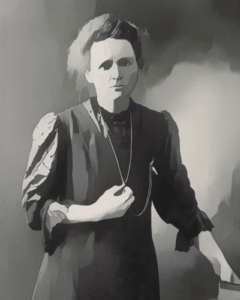
Marie Curie (1867-1934), Nobel Prize laureate in Physics and Chemistry, revolutionized science through her discovery of polonium and radium and her pioneering research on radioactivity.
Contribution to radiological and nuclear protection
Her work established:
- The scientific understanding of radioactive phenomena
- The foundation of modern radiation protection protocols
- Early applications of radiology in emergency and wartime medicine
During World War I, she developed mobile X-ray units to assist battlefield surgeons — an early example of science applied to crisis response.
Impact on CBRN: Curie’s work underpins today’s radiation detection, monitoring and nuclear safety standards essential in CBRN defense.
3. Irène Joliot-Curie: advancing nuclear science and safety
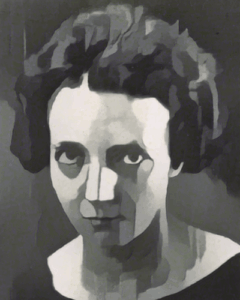
Irène Joliot-Curie (1897-1956), daughter of Pierre and Marie Curie, was awarded the Nobel Prize in Chemistry in 1935. Together with Frédéric Joliot, she discovered artificial radioactivity.
Impact on Nuclear Safety and NRBC Risk Management
Her research enabled:
- Controlled production of radioactive isotopes
- Advances in nuclear medicine
- Improved understanding of nuclear reactions
These scientific advances contributed to the development of modern nuclear safety frameworks and radiological risk mitigation strategies, central components of CBRN preparedness.
4. Rosalind Franklin: molecular biology and biological threat understanding

Rosalind Franklin (1920-1958) made critical contributions to the discovery of the DNA double helix structure.
Why this matters for CBRN biological defense
Understanding DNA is fundamental to:
- Identifying biological agents
- Developing diagnostic technologies
- Designing vaccines and countermeasures
- Strengthening biosafety and biosecurity systems
Modern CBRN biological defense, including laboratory detection and pathogen characterization, builds directly on molecular biology breakthroughs.
5. Gertrude B. Elion: medical countermeasures against biological threats
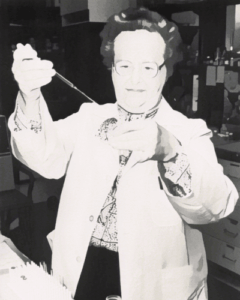
Gertrude Elion (1918-1999), Nobel Prize in Physiology or Medicine, developed groundbreaking treatments for infectious diseases.
Her work led to:
- Antiviral therapies
- Immunosuppressive drugs
- Advances in pharmaceutical research methodologies
In a CBRN context, effective medical countermeasures are essential in responding to biological incidents, pandemics or deliberate biological threats.
Resilience in CBRN defense does not rely solely on protective suits and detection systems — it also depends on medical readiness.
6. Alice Hamilton: pioneer of industrial toxicology
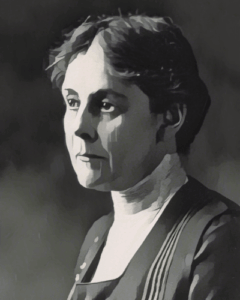
Alice Hamilton (1869-1970), the first woman appointed to the faculty of Harvard Medical School, is considered one of the founders of modern industrial toxicology.
She documented:
- The harmful effects of lead, mercury, and industrial chemicals
- Workplace chemical exposure risks
- The need for regulatory safety standards
Her research helped achieve official recognition of occupational diseases and influenced the development of industrial safety regulations.
Today’s chemical protective suits and filtration systems are developed based on toxicological knowledge pioneered by researchers like Hamilton.
7. Women in modern CBRN innovation and protective equipment
Today, women are actively contributing to:
- Advanced materials engineering for CBRN protective suits
- Filtration technologies for chemical and biological protection
- Radiological detection systems
- Biosecurity laboratory research
- Hazardous materials response planning
The development of high-performance CBRN PPE requires interdisciplinary collaboration across chemistry, microbiology, physics, textile engineering and operational defense strategy.
Diversity in scientific research enhances:
- Innovation capacity
- Technological reliability
- Adaptability to emerging hybrid threats
8. Why women’s role is strategic in sensitive scientific fields
The CBRN, defense, civil security, and crisis management sectors require:
- Scientific rigor
- Innovation capacity
- Strategic vision
- Resilience and informed decision-making
Encouraging women to engage in these fields not only strengthens diversity but is also a key factor in scientific excellence, technological innovation, and global security. Women bring fresh perspectives that are often crucial in high-stakes areas where mistakes can have serious consequences, such as protection against nuclear, radiological, biological, and chemical (CBRN) risks.
9. Scientific Legacy and the Future of CBRN Protection
Today, the contribution of women in CBRN fields goes far beyond scientific research and technological innovation: it extends to international governance and global security. The appointment of Sabrina Dallafior as the first female Director-General of the OPCW [11] (her mandate will begin on July 25, 2026) perfectly illustrates this evolution.
In an international context nuclear, radiological, biological, and chemical risks remain ever-present, encouraging women to take on scientific, technical, strategic, and diplomatic roles is essential in order to:
- Ensure inclusive and effective international governance and thereby guarantee the respect of fundamental principles such as disarmament and non-proliferation
- Strengthen innovation and technological development
- Develop protection solutions adapted to emerging threats
- Encourage the sharing of information and knowledge related to the peaceful uses of nuclear science, biology, and chemistry
From Marie Curie to Sabrina Dallafior, and through all women researchers, engineers, and international leaders, women have shaped and continue to shape the most sensitive scientific and strategic fields of our time. International Women’s Day is the perfect occasion to celebrate their legacy and recognize that the future of CBRN safety depends on excellence, innovation, and diversity.
10. Frequently asked questions
What are Marie Curie’s major contributions to CBRN protection?
Marie Curie founded modern radiological science by discovering polonium and radium. Her work enabled the fundamental understanding of radioactivity, the development of radiation protection protocols, and the emergence of radiological risk management standards. During World War I, she created mobile X-ray units, prefiguring the scientific management of crisis situations, a central principle of modern CBRN doctrines.
How did Rosalind Franklin’s work influence biosafety?
Rosalind Franklin played an essential role in discovering the DNA double helix structure. This fundamental understanding enables today’s identification of biological agents, detection of biological threats, development of medical countermeasures, and elaboration of biosafety strategies. The fight against biological threats (viruses, bacteria, toxins) relies directly on these scientific foundations.
Who is Sabrina Dallafior and why is her appointment historic?
Sabrina Dallafior is the first woman appointed Director-General of the Organisation for the Prohibition of Chemical Weapons (OPCW). She will take office on July 25, 2026. Her appointment is historic because she will lead one of the world’s most important institutions in the fight against chemical weapons and CBRN threat prevention, demonstrating that women now influence international governance and global security.
Why are Alice Hamilton’s contributions important for chemical protection?
Alice Hamilton, pioneer of industrial toxicology, documented the effects of lead and industrial solvents, occupational poisonings, and the importance of safety standards. Her research constitutes the modern foundations of chemical risk management, a central element of CBRN chemical doctrines. Protection against chemical agents today relies on toxicological assessment, decontamination protocols, and the development of adapted CBRN PPE.
In which fields do women contribute to CBRN innovation today?
Women today hold key positions in research in microbiology and biosafety, filtering materials chemistry, textile engineering for CBRN PPE, radiation protection, and specialized CBRN defense units. This diversity of scientific profiles promotes technological innovation, performance of protection solutions, and adaptability to new hybrid threats.