



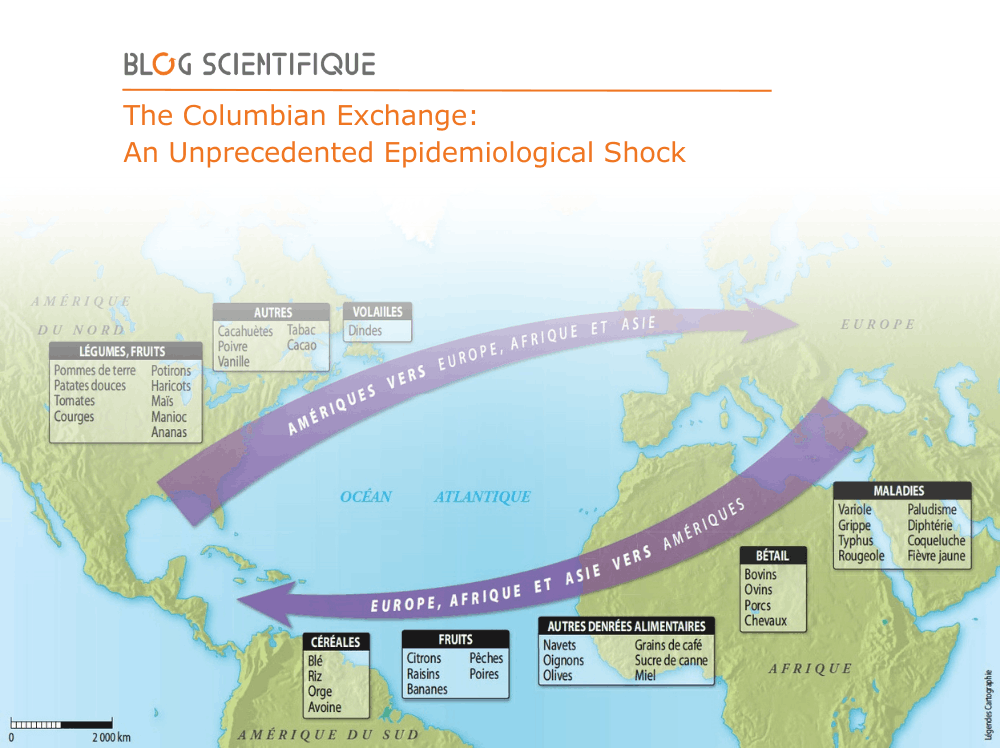
In 1492, Christopher Columbus reached the Americas, triggering one of humanity’s greatest health catastrophes. The Columbian Exchange transported smallpox, measles, and typhus to Indigenous populations with no immune defenses. Within a century, 80 to 95% of the pre-Columbian population perished. This historical tragedy illustrates vulnerability to novel pathogens and foreshadows today’s biosafety challenges. Lessons from this epidemiological shock remain essential for understanding the importance of CBRN-E protective equipment against contemporary biological threats.
In 1492, Christopher Columbus reached the Americas, triggering one of the greatest upheavals in human history. In less than a century, animal and plant species from each hemisphere crossed oceans—and with them, their infectious diseases.
This phenomenon, known to historians as the Columbian Exchange, dramatically illustrates the importance of protection against pathogens and foreshadows contemporary challenges in biosafety.
1. Millennia of biological isolation
For approximately 15,000 years, Indigenous populations of the Americas evolved in near-complete biological isolation. This geographic separation gave rise to two distinct epidemiological worlds.
European populations, having lived for millennia in close contact with domesticated animals, had developed a degree of collective immunity to many diseases.
By contrast, Indigenous societies had never been exposed to Eurasian pathogens or to the infectious diseases circulating in Europe, Asia, and Africa.
2. The invisible arsenal of the conquistadors
European explorers unknowingly carried a formidable biological arsenal.
Smallpox, measles, influenza, typhus, bubonic plague, and other pathogens crossed the Atlantic with them. Endemic in Europe—where populations had developed partial immune resistance—these diseases proved devastating for Indigenous peoples.
Smallpox was particularly lethal. Highly contagious, with mortality rates reaching up to 30%, it wiped out entire communities. Contemporary chroniclers describe villages emptied of inhabitants, unable to withstand this unknown disease.
3. A demographic collapse
Although demographic estimates remain debated, historians agree on a stark conclusion.
The pre-Columbian population of the Americas, estimated at between 50 and 100 million people, declined by 80 to 95% in the century following European arrival. Some regions, particularly the Caribbean, saw their Indigenous populations almost completely disappear.
This decline was not solely the direct result of infection. Epidemics triggered cascading social collapse: the inability to cultivate fields, the breakdown of political and religious structures, famine, and deep demoralization among survivors.
Weakened immune systems made these populations even more vulnerable to successive waves of disease.
4. Aggravating factors
Several elements amplified this health catastrophe.
The high urban density of major pre-Columbian civilizations—Aztecs, Incas, and Mayas—facilitated rapid transmission of disease.
Ritual and funerary practices involving close physical contact further accelerated contagion.
These factors were compounded by the social upheavals of conquest: forced displacement, coerced labor, malnutrition, and the collapse of traditional structures, all of which severely weakened immune defenses.
5. Lessons for modern biosafety
This historical epidemiological shock offers essential lessons for our time. It demonstrates the vulnerability of populations to novel pathogens and the speed at which disease can spread in the absence of appropriate protective measures.
In today’s context of accelerated globalization, marked by constant international travel, the risk of emergence and rapid dissemination of new pathogens remains high.
The COVID-19 pandemic starkly underscored this reality. Biological threats—whether natural, accidental, or deliberate—demand constant vigilance and effective protective systems.
6. From history to prevention
The Columbian Exchange stands as a textbook case in historical epidemiology. It tragically illustrates what can occur when immunologically unprotected populations are exposed to unfamiliar pathogens without any form of protection.
Today, CBRN-E protection (Chemical, Biological, Radiological, Nuclear, and Explosive) forms part of this historical continuum. Modern personal protective equipment, the result of decades of research, represents our first line of defense against biological risks, whether pandemic-related or linked to specific incidents.
The epidemiological shock of 1492 reminds us that in matters of biosafety, preparedness and protection are never superfluous—they can mean the difference between survival and catastrophe.
📚 Bibliography
Foundational works:
- Crosby, Alfred W. (1972). The Columbian Exchange: Biological and Cultural Consequences of 1492. Greenwood Publishing Group. (This seminal work introduced the term “Columbian Exchange” and provides a detailed analysis of the biological impact of contact between the Old and New Worlds.)
- McNeill, William H. (1976). Plagues and Peoples. Anchor Press. (A classic in the history of epidemics that positions infectious diseases as a major driving force in human history.)
- Diamond, Jared. (1997). Guns, Germs, and Steel: The Fates of Human Societies. W. W. Norton & Company. (Popularizes the argument of Eurasian immunological advantage resulting from long-term proximity to domesticated animals.)
Demographic and epidemiological studies:
- Dobyns, Henry F. (1966). “Estimating Aboriginal American Population: An Appraisal of Techniques with a New Hemispheric Estimate.” Current Anthropology, 7(4), 395–416. (A key source for estimating the 90–95% demographic collapse of Indigenous populations.)
- Cook, Noble David. (1998). Born to Die: Disease and New World Conquest, 1492–1650. Cambridge University Press. (A detailed analysis of major epidemics (smallpox, measles, typhus) and their regional impacts across the Americas.)
- Alchon, Suzanne Austin. (2003). A Pest in the Land: New World Epidemics in a Global Perspective. University of New Mexico Press. (Confirms the concept of “virgin soil epidemics” and supports the demographic estimates cited.)
7. Frequently asked questions
What is the Columbian Exchange?
The Columbian Exchange refers to the massive transfer of animal and plant species, as well as infectious diseases, between Europe and the Americas after 1492. This phenomenon triggered one of history’s greatest epidemiological shocks, with the transmission of Eurasian pathogens (smallpox, measles, typhus) to Indigenous populations lacking immunity. The exchange also transformed global agriculture and diet through the transfer of crops like potatoes and maize between continents.
Why were European diseases so devastating to Indigenous Americans?
Indigenous American populations had never been exposed to Eurasian pathogens during 15,000 years of biological isolation. They possessed no collective immunity against diseases like smallpox or measles. Europeans, living in close contact with domesticated animals for millennia, had developed relative resistance to these infections. This immunological difference explains why diseases endemic in Europe caused 80 to 95% mortality rates in the Americas.
How many people died during the American epidemiological shock?
Historians estimate the pre-Columbian population of the Americas at between 50 and 100 million people. In the century following European arrival, 80 to 95% of this population perished, potentially 40 to 95 million deaths. Some regions like the Caribbean saw their Indigenous populations almost completely eradicated. This demographic catastrophe resulted primarily from successive epidemics of smallpox, measles, and typhus.
What lessons does the Columbian Exchange offer for current biosafety?
The Columbian Exchange demonstrates population vulnerability to novel pathogens and rapid disease spread without protection. With current globalization, the risk of new pathogen emergence remains high, as COVID-19 demonstrated. These historical lessons justify the importance of CBRN-E protective equipment and modern biosafety protocols to prevent future health catastrophes and maintain effective defense systems.
What was the deadliest disease of the Columbian Exchange?
Smallpox was the most devastating disease of the Columbian Exchange. Highly contagious, it had mortality rates reaching up to 30% and wiped out entire communities. Chroniclers describe entire villages emptied of inhabitants. Smallpox, combined with measles, typhus, and influenza, created successive epidemic waves that permanently weakened Indigenous populations and triggered cascading social collapse throughout the Americas.