



Understanding the CBRN Threat
CBRN threats encompass various hazards associated with chemical, biological, radiological, and nuclear agents, which can have catastrophic consequences for people, the environment, and infrastructure. Their effects can be widespread, long-lasting, and difficult to manage.
CBRN threats are increasing due to the rise in conflicts and the rapid development of technology. Protecting populations against these threats requires a comprehensive, multi-layered approach and has become a priority for governments and international organizations.
Biological Threats in 2026
Biological and health-related threats are stronger today for several reasons:
Globalization:
With global trade, products and live animals move across the world, potentially introducing pathogens into areas where they did not previously exist.
Human mobility:
Diseases can spread rapidly due to the high level of international travel.
Antimicrobial resistance:
Overuse of antibiotics has led to bacteria that are harder to treat and therefore more dangerous.
Ecological imbalances and climate change:
Deforestation disrupts biodiversity and creates conditions conducive to virus transmission by increasing human-wildlife contact. Researchers highlight zoonoses (diseases transmitted from animals to humans) and arboviruses (mosquito-borne illnesses) as some of the most pressing threats. Respiratory viruses, such as coronaviruses, remain under close surveillance due to their capacity to mutate quickly and evade immunity.
Societal vulnerability:
Some countries lack the resources to adequately protect themselves or respond effectively to biological threats.
In this context, adopting a holistic and coordinated approach is essential.
Is Biological Terrorism a Growing Concern?
Experts consider the biological terrorist threat potentially higher or more complex today, even though it is difficult to quantify.
The rapid development of artificial intelligence and biotechnological tools has made knowledge and methods—previously accessible only to specialists—more widely available. These tools pose security risks because they can be misused for malicious purposes.
It has become easier to acquire dangerous biological agents capable of triggering serious health, security, or political crises.
In 2026, the primary challenge is early risk anticipation and detection, coupled with a coordinated international response. Consequently, governments, international institutions, and scientific communities are focusing on strengthening security frameworks, regulatory measures, and response mechanisms.
Evolution of CBRN Threats in Defense
In the military domain, shifts in the international landscape are reflected in the constant escalation of CBRN threats and risks. Moreover, the use of chemical weapons by states that are signatories to the chemical weapons Convention demonstrates that CBRN weapons must now be regarded as a real operational risk.
CBRN threats aim both to influence public opinion and to disrupt adversaries. As a result, CBRN defense has become imperative to enable armed forces to carry out their missions in a CBRN environment with minimal degradation of operational capabilities.
France’s Role in NATO CBRN Risk Management
The French Armed Forces possess internationally recognized expertise in this field. More broadly, France plays an active role in NATO’s CBRN initiatives, contributing operationally, technologically, and strategically.
France Takes the Lead in NATO’s CBRN Alert in 2026
Starting July 2026, France will officially command the land and air components of NATO’s Allied Reaction Force (ARF). In this capacity, France will oversee NATO’s CBRN alert, a key operational component.
Objectives of NATO’s CBRN Alert
NATO’s CBRN alert encompasses a set of capabilities and systems designed to detect, protect against, and respond to CBRN agent threats. Its goal is to enhance early detection, protect populations and forces, and ensure international coordination during crises.
Primarily designed to support member countries, NATO’s CBRN assets can also assist partner nations to strengthen regional security or respond to CBRN crises with potential international implications (e.g., epidemics).
Coordinating Operational Response in Crises
In the event of an alert, France will initially coordinate threat detection and assessment systems, and, if a threat is confirmed, activate emergency procedures, including the deployment of specialized units (detection, decontamination, medical care). France will therefore assume an operational role, commanding CBRN units integrated into the ARF and coordinating specialized centers.
French forces are trained and equipped to operate with the ARF, ensuring a rapid response to any alert.
Specialized Military Capabilities
France has an integrated network of military and medical units trained and equipped to respond to CBRN threats, including:
- The 2nd Dragoon Regiment – Nuclear, Biological, Chemical (NBC), France’s reference unit for CBRN interventions
- The 1st Regiment for CBRN Detection and Response
- Engineering units specialized in CBRN operations.
CBRN Protective Equipment
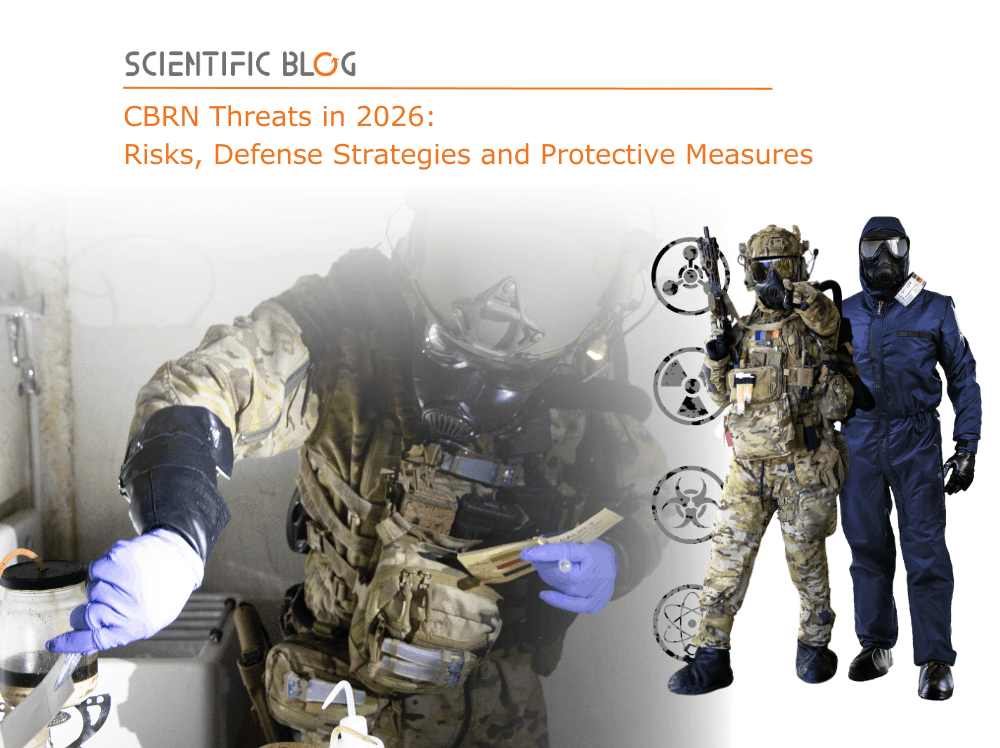
Protective and decontamination equipment is central to responding effectively to CBRN crises. OUVRY offers a range of personal protective equipment (PPE) and other essential tools to face CBRN threats:
- Respiratory protection: OC50® masks with wide-spectrum canister
- Body protection: for armed forces: TFI® suits offering 24-hour CBRN protection; for medical personnel: POLYCOMBI® suits providing 12-hour CBRN protection, gloves, and overboots
- Emergency decontamination: DECPOLABS® and DECPOLRAD® wipes for radiological contamination
- Transport: EVACOPS® bags for evacuating contaminated or potentially contaminated victims; AIR PROTEC® mobile isolation systems for handling patients with airborne infectious diseases without risk to staff.
OUVRY’s solutions meet the highest CBRN standards. Designed for extreme environments, they protect first responders and intervention personnel across defense, industrial, and healthcare sectors.