

Close Menu
  • OUVRY
    • About us
    • Referencies
    • Pressroom
    • News
  • CBRN Protection
    • Skin protection
    • Respiratory
    • Transportation
  • Decontamination
  • Detection
  • Training
  • Scientific Blog
  • Contact us
  • Download the catalog
  • Français
  • English
Facebook X (Twitter) Instagram YouTube LinkedIn
  • Ouvry
  • Referencies
  • Pressroom
  • News
  • Contact
  • Recruitment
  • English
    • Français
    • English
Facebook X (Twitter) Instagram YouTube LinkedIn
Ouvry – CBRN Protective SystemOuvry – CBRN Protective System
Contact
  • CBRN Protection
    • Skin protection
      • CBRN Combat suit

        TFI® CBRN Protective Intervention Coverall

        OCPU® CBRN Undergarment

        POLYCOMBI® CBRN Polyvalent Overall

        OBOOTS® CBRN Protective Butyl Overboots

        TARGET® CBRN Combat gloves

        OG05® CBRN Protective Butyl Gloves

        OPPS® Pilot CBRN Protective System

    • Respiratory
          • OC50® CBRN Mask

            NH15 Escape hood

            OPC50® CBRN Mask

            CFO CBR® Wide Spectrum

            CFO® Lacry Canister

    • Transportation
      • EVACOPS® Extraction bag for CBRN contaminated victims

        CBRN body bag

        Non-CBRN storage bag

        Tactical Bag for CBRN Mask

        Transport bag By Ouvry

  • Decontamination
        • DECPOL RAD® – Radiodecontamination wipes

          DECPOL ABS® – Emergency decontamination wipe

  • Detection
        • Detector paper

  • Training
        • Polycombi® Training

          TFI® Training

          Training Combat suit

          TARGET® Gloves Training

          SIMKIT® Chemical Warfare Agents simulants GB-HD-VX

          CFO® Training Canister

  • Scientific Blog
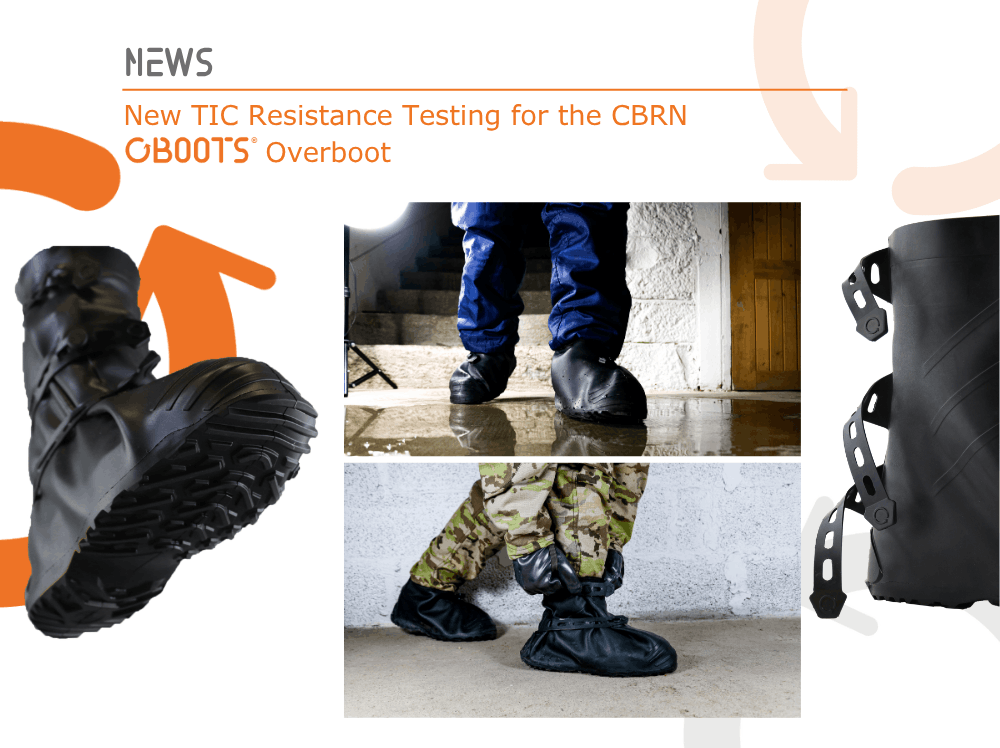
        • New TIC resistance testing for the CBRN OBOOTS® overboot

          Tokyo sarin attack of March 20, 1995: a major turning point in CBRN risk management

          Fukushima nuclear accident: 15-year assessment and developments in protection

          Women pioneers in CBRN defense: shaping science, protection and global security

          OUVRY’s extreme wardrobe: a systemic approach to CBRN protection

          Alexei Navalny “poisoned”: epibatidine at the heart of an international investigation

          Mustard Gas Leak in India: CBRN Response and Safety

          The Columbian Exchange: an unprecedented epidemiological shock

          Ouvry’s CBRN Solutions Highlighted at CBRNe Summit Europe 2026

          CBRN Threats in 2026: Risks, Defense Strategies and Protective Measures

Ouvry – CBRN Protective SystemOuvry – CBRN Protective System
Home»News»New TIC resistance testing for the CBRN OBOOTS® overboot
News

New TIC resistance testing for the CBRN OBOOTS® overboot

24 March 20263 Mins Read
Print
Facebook Twitter LinkedIn Email
Share
Facebook Twitter LinkedIn Email
11

Summary

The NRBC OBOOTS® overboot strengthens its protection against toxic industrial chemicals through new testing. Made of butyl rubber, it protects for a minimum of 48 hours against chemical warfare agents and 32 hours against TICs. Six new chemicals have been tested: methanol, ammonium hydroxide, hydrogen peroxide, isopropanol, sodium hypochlorite, and formaldehyde. Results confirm a performance level of 5/5 for a minimum of 32 hours for all substances, corresponding to complete impermeability and expanding protection in industrial environments.

📋 Table of Contents

  • 1. An overboot designed for CBRN protection
  • 2. Resistance testing initially conducted on four chemicals
  • 3. New tests to meet operational requirements
  • 4. Performance confirmed for six additional TICs
  • 5. Extended protection for industrial environments
  • 6. Frequently asked questions

1. An overboot designed for CBRN protection

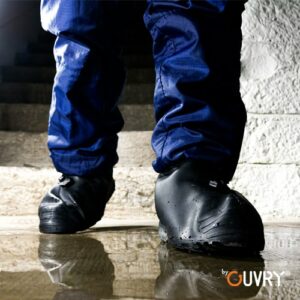
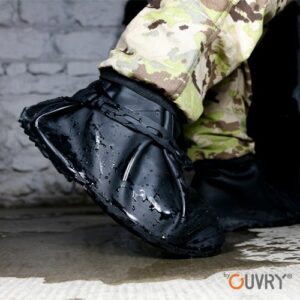
The CBRN OBOOTS® overboot is worn over boots, shoes, and combat footwear. Made of butyl rubber, it protects responders against chemical warfare agents in liquid, vapor, or aerosol form for a minimum of 48 hours.

It also provides level 5/5 protection for at least 32 hours against toxic industrial chemicals (TICs).
2. Resistance testing initially conducted on four chemicals

Until now, resistance to TIC permeation had been assessed using four chemicals: sodium hydroxide (caustic soda), sulfuric acid, nitric acid, and acetic acid.

3. New tests to meet operational requirements

To address numerous requirements expressed in tenders and to expand the use of the overboot in industrial environments, a new series of resistance tests has been conducted. Six additional toxic industrial chemicals, among those most frequently specified in tenders, were selected:

  • methanol
  • ammonium hydroxide
  • hydrogen peroxide
  • isopropanol
  • sodium hypochlorite
  • formaldehyde

4. Performance confirmed for six additional TICs

Test results show that the CBRN OBOOTS® overboot achieves a performance level of 5/5 for a minimum of 32 hours against all six substances tested, corresponding to complete impermeability.
5. Extended protection for industrial environments

This new testing campaign broadens the range of toxic industrial chemicals against which the OBOOTS® overboot provides protection, once again demonstrating its effectiveness.

6. Frequently asked questions

What is the CBRN OBOOTS® overboot?

The CBRN OBOOTS® overboot is protective equipment worn over boots, shoes, or combat footwear. Made of butyl rubber, it protects responders against chemical warfare agents in liquid, vapor, or aerosol form for a minimum of 48 hours, and offers level 5/5 protection for at least 32 hours against toxic industrial chemicals.

What new TICs were tested on the OBOOTS® overboot?

Six new toxic industrial chemicals were tested to meet requirements expressed in tenders: methanol, ammonium hydroxide, hydrogen peroxide, isopropanol, sodium hypochlorite, and formaldehyde. These substances are among the most frequently specified in industrial environment requirements.

What performance level does the OBOOTS® overboot achieve against TICs?

Tests demonstrate that the CBRN OBOOTS® overboot achieves a performance level of 5/5 for a minimum of 32 hours for all six newly tested chemicals. This 5/5 level corresponds to complete impermeability, guaranteeing optimal protection for responders in industrial environments against these toxic substances.

Against which chemicals was the OBOOTS® overboot previously tested?

Before this new testing series, the OBOOTS® overboot’s resistance to TIC permeation had already been evaluated for four chemicals: sodium hydroxide (caustic soda), sulfuric acid, nitric acid, and acetic acid. The new tests therefore significantly expand the validated protection spectrum.

Why were these new tests conducted?

These new resistance tests were conducted to address numerous requirements expressed in tenders and to expand the use of the OBOOTS® overboot in industrial environments. The six additional TICs selected are among the most frequently specified in procurement specifications, thereby broadening the equipment’s operational application scope.

Share. Facebook Twitter LinkedIn Email

Related Posts

OUVRY local sponsor of CBRNe Summit Europe 2026 in Lyon

20 January 2026

OUVRY Accelerates Nuclear Sector Growth with the Nuclear Accelerator Program

13 January 2026

Ouvry in 2026: Must-Attend CBRN Events in the First Half of the Year

9 January 2026

Comments are closed.

Ouvry – CBRN Protective System
Facebook X (Twitter) Instagram YouTube LinkedIn
  • CBRN PROTECTION
  • DECONTAMINATION
  • DETECTION
  • SERVICES
  • SCIENTIFIC BLOG
© 2026 Ouvry - Designed by A2Développement - Legal notice

Type above and press Enter to search. Press Esc to cancel.

X
We use cookies to guarantee you the best experience on our site. If you continue to use the latter, we will consider that you accept the use of cookies.