



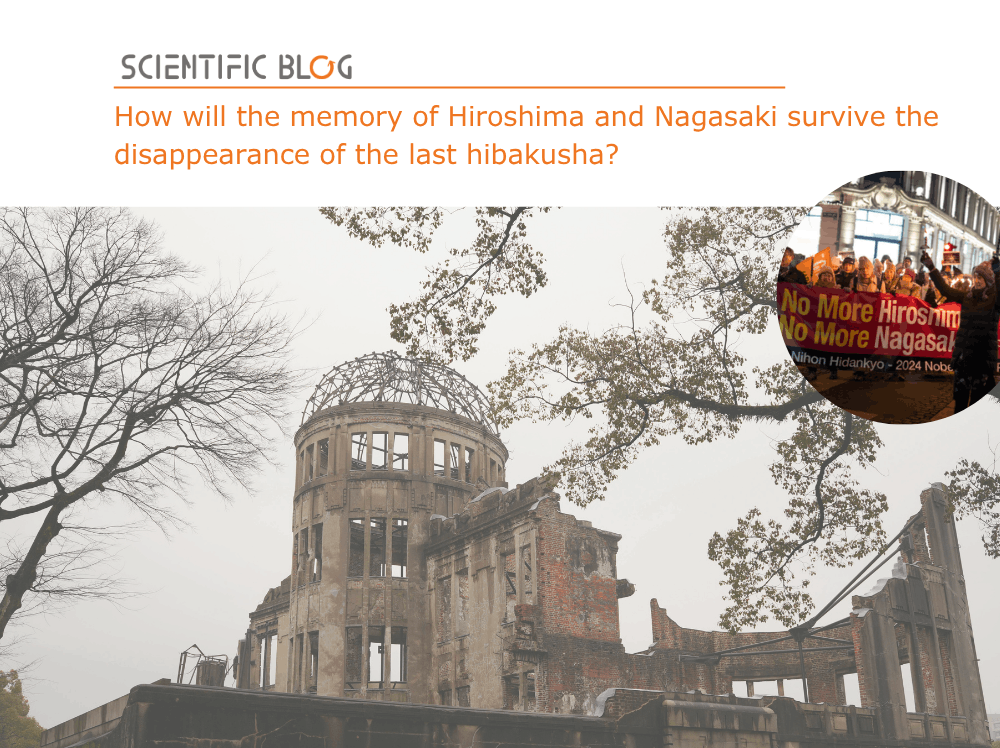
More than 80 years after the atomic bombings in Japan, the hibakusha—the bombs’ surviving witnesses—are dying out, with only 99,100 left in 2025. This article explains who the hibakusha are, how their organization Nihon Hidankyo won the 2024 Nobel Peace Prize for its pacifist advocacy, and what museums, memorial halls, and even restored hibaku pianos are doing to keep their testimony alive for future generations.
On August 6, 1945, an American atomic bomb destroyed Hiroshima, killing around 140,000 people. Three days later, on August 9, a second bomb struck Nagasaki, killing nearly 80,000 people. More than eighty years on, these two dates still bring the same unchanging rituals of remembrance in Japan: early-morning ceremonies, lantern releases, moments of silence. Yet the direct witnesses are dying out year by year. Known as hibakusha—literally, “people affected by the bomb”—they have carried this memory for eight decades. As their numbers dwindle inexorably, how will this memory be passed on once no living voice remains to tell it?
1. Who are the hibakusha?
The term hibakusha does not describe a single, uniform group. It covers everyone exposed to the bombings: those present in either city at the moment of the blast, those who entered the affected areas within the following two weeks, and indirect victims too, including babies exposed to radiation in utero. They are all recorded on official registers kept in Hiroshima and Nagasaki. Their numbers have fallen relentlessly over the years: from 650,000 at the end of the war to 99,100 in 2025.
Beyond physical after-effects, hibakusha have also suffered psychological and social harm, often passed down across generations. Widespread ignorance of the illnesses caused by the bomb, visible scarring, and fear of contamination by contact led to outright rejection by Japanese society and left many hibakusha in deep social hardship.
2. Nihon Hidankyo, the hibakusha organization awarded the 2024 Nobel Peace Prize
Some hibakusha chose to turn their experience into collective action to keep their memory alive1. That is how Nihon Hidankyo, Japan’s largest organization of atomic bomb survivors, came to be founded in August 1956. It has pursued a twofold goal ever since: pushing the Japanese state to recognize and support hibakusha, and carrying a pacifist message onto the world stage. Among other achievements, it played a decisive role in shaping the Treaty on the Prohibition of Nuclear Weapons (TPNW), which came into force in 2021 and has since been ratified by 73 countries, banning the development and possession of atomic weapons.
Nihon Hidankyo was awarded the Nobel Peace Prize in 2024. The committee praised the organization’s efforts toward a world free of nuclear weapons, and the way hibakusha testimonies helped convey a suffering that had long remained largely incomprehensible to the rest of the world—making clear that such weapons must never be used again.
Masako Wada, for instance, is a hibakusha who survived the atomic bombing of Nagasaki. She was 22 months old when the bomb was dropped on the city. Too young to remember that day herself, she grew up hearing her mother recount the experience from time to time. Bit by bit, Masako came to a realization: “I am a hibakusha.” She went on to get involved with a local association of atomic bomb survivors, whose mission is to ensure there are never any hibakusha again. Since 2015, she has served as Deputy Secretary General of Nihon Hidankyo.
3. The urgent race to pass on the hibakusha’s memory
Nihon Hidankyo is now growing anxious about the aging of its members, whose average age has passed 85. Their testimony carries enormous weight—so how will their memory outlive them? A number of institutions have taken up the task of safeguarding it.
3.1. Keeping the memory of Hiroshima and Nagasaki alive
Beyond an exhibition of victims’ belongings and other remnants of the bombings, Hiroshima’s Peace Memorial Museum runs a “successor” program: a training course in which participants collect hibakusha testimonies so they can, in turn, pass those stories on themselves.
In Hiroshima as well, the National Peace Memorial Hall for the Atomic Bomb Victims gathers and preserves survivors’ testimonies, with the explicit aim of keeping this experience alive for future generations.
This transmission also runs through objects that lived through the bombings themselves. That is the case for the hibaku pianos (literally, “bomb-affected pianos”): eleven instruments are recorded as having survived the bombings of Hiroshima and Nagasaki. Restored and displayed in a museum dedicated to them, they are regularly played at commemorative concerts and peace events.
None of these efforts can replace the hibakusha’s own words. What they do is preserve that testimony for the moment it will eventually fall silent. The challenge today, in perpetuating the memory of Hiroshima and Nagasaki, is to shift from memory carried by first-hand testimony to memory carried by legacy—while holding onto as much of its original force as possible.
4. Frequently asked questions
Who are the hibakusha?
Hibakusha are people affected by the atomic bombings of Hiroshima and Nagasaki in 1945. The term covers those present during the blasts, people who entered the affected areas within two weeks afterward, and indirect victims such as babies exposed to radiation in utero. All are recorded on official registers in Hiroshima and Nagasaki.
How many hibakusha are still alive today?
The number of hibakusha has fallen sharply since the end of the war, from around 650,000 survivors to 99,100 in 2025. With their average age now past 85, this population is shrinking every year, making the transmission of their testimony increasingly urgent.
Why did Nihon Hidankyo win the 2024 Nobel Peace Prize?
Nihon Hidankyo, Japan’s largest organization of atomic bomb survivors, was awarded the prize for its decades-long pacifist advocacy and its role in shaping the Treaty on the Prohibition of Nuclear Weapons. The committee also highlighted how hibakusha testimonies conveyed a suffering long misunderstood abroad.
How is the memory of Hiroshima and Nagasaki being preserved?
Institutions such as Hiroshima’s Peace Memorial Museum and the National Peace Memorial Hall for the Atomic Bomb Victims collect and preserve survivor testimonies. Museum programs also train “successors” to learn and retell hibakusha stories once no living witnesses remain to share them directly.
What are hibaku pianos?
Hibaku pianos are instruments that survived the atomic bombings of Hiroshima and Nagasaki—eleven are known to still exist. Restored and housed in a dedicated museum, they are played at commemorative concerts and peace events as a physical link to the memory of the bombings.
📚 Sources & bibliography
-
Le combat des « successeurs » pour la mémoire d’Hiroshima
https://www.lemonde.fr/international/article/2020/08/05/le-combat-des-successeurs-pour-la-memoire-d-hiroshima_6048231_3210.html -
Les hibakusha, passeurs de mémoire nucléaire
https://www.iris-france.org/62093-les-hibakusha-passeurs-de-memoire-nucleaire/ -
Qui sont exactement les Hibakusha, survivants de la bombe atomique ?
https://www.youtube.com/watch?v=i9oF7WpCKvQ