




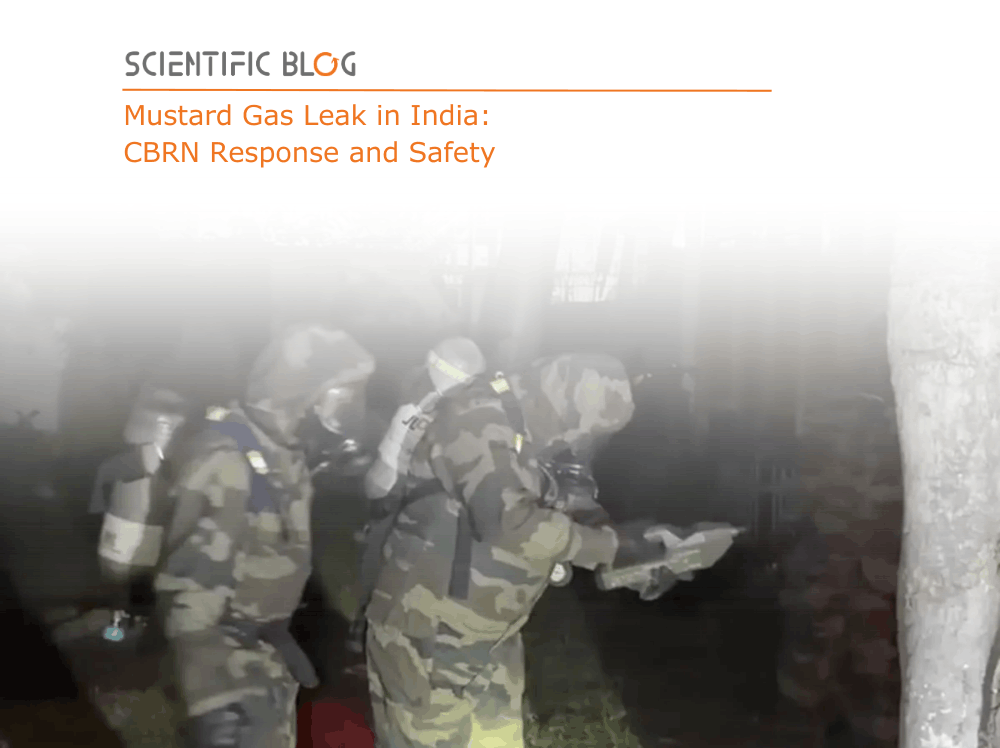
On February 7, a mustard gas leak near Jammu Airport mobilized Indian CBRN forces. This incident highlights persistent risks from chemical warfare agents. Mustard gas, a deadly vesicant used since World War I, causes severe cutaneous, respiratory, and genetic damage. The intervention requires strict protocol: detection, containment, control, and casualty management. Teams must have certified personal protective equipment adapted to toxic gases. This event underscores the importance of CBRN prevention and training for emergency response personnel.
1. Incident reported in Jammu
On February 7, a major gas leak was reported near Jammu Airport in India. The leak, originating from a gas cylinder stored in a warehouse, prompted intervention by the local police.
The State Disaster Response Force (SDRF, the state-level emergency response unit) and the National Disaster Response Force (NDRF, India’s federal disaster management unit, including CBRN incidents) were quickly deployed to the scene, as the substance involved was likely mustard gas. The surrounding area was cordoned off during operations to protect airport infrastructure. Authorities reported that the situation was under control. An investigation has been launched to determine the cause of the leak.
2. Dangers of mustard gas
Like chlorine, mustard gas is among the deadliest chemical warfare agents. Also known as sulfur mustard, it belongs to the vesicant category, causing severe damage to skin and mucous membranes. It can leave serious cutaneous, respiratory, psychological, and genetic sequelae. It emits a mustard-like odor, hence its name, and is considered persistent because it can remain on surfaces for several days. Widely used during World War I, it continues to be employed by some states and law enforcement agencies.
3. Operational response and CBRN protocol
In the event of a gas leak, particularly involving a chemical warfare agent, an intervention and containment protocol must be implemented, with personnel equipped with protective gear specifically trained to:
- detect and identify the chemical agent
- secure the affected area
- control the leak
- manage any casualties
4. Appropriate personal protective equipment
It is essential that response teams are equipped with gear suitable for initial chemical interventions, particularly certified PPE.
4.1. Respiratory protection
CBRN protective masks with filters prevent inhalation of particles and gases.
4.2. Body protection
Protective suits, gloves, and overboots must provide an effective barrier against chemical agents while allowing mobility and operational endurance.
5. OUVRY expertise
Solutions developed by OUVRY meet the highest CBRN standards. Designed for extreme environments, they provide effective protection for intervention teams against chemical risks while ensuring ergonomics, reliability, and operational compatibility.
6. Lessons and prevention
Incidents like this remind us that no one is immune to a CBRN disaster. It is essential to emphasize the importance of:
- regular security exercises
- using certified PPE
- prevention measures
- public awareness and dissemination of CBRN information
7. Frequently asked questions
What is mustard gas and why is it dangerous?
Mustard gas, also known as sulfur mustard, is a chemical warfare vesicant agent that causes severe cutaneous, respiratory, psychological, and genetic damage. Highly toxic, it emits a characteristic mustard odor and can persist on surfaces for several days. Massively used during World War I, it remains one of the deadliest chemical agents and continues to be employed by some states today.
Which forces responded to the gas leak in Jammu?
Two main forces intervened: the State Disaster Response Force (SDRF), responsible for disaster management at the state level in India, and the National Disaster Response Force (NDRF), a federal force specialized in CBRN disaster management. These teams quickly secured the area around Jammu Airport and controlled the leak from a cylinder stored in a warehouse.
What is the intervention protocol for a chemical agent leak?
The CBRN protocol includes four essential steps: detect and identify the chemical agent using specialized equipment, secure the area to prevent spread, control the leak at its source, and manage any casualties. This protocol requires trained personnel equipped with certified PPE adapted to toxic gases to ensure their safety during operations.
What protective equipment is needed against mustard gas?
Protection against mustard gas requires CBRN-certified equipment: respiratory protective masks with filters against particles and gases, sealed protective suits, butyl gloves, and chemical overboots. This equipment must provide an effective barrier while allowing mobility and operational endurance for intervention teams in extreme environments.
How can organizations prepare for CBRN risks?
CBRN preparedness relies on four pillars: conducting regular security exercises to maintain readiness, using only certified and appropriate PPE, developing a prevention culture within intervention teams, and widely disseminating CBRN information to the general public. Continuous training and adequate equipment are essential for effective response.