



In June 2025, Israel, followed by the United States, launched airstrikes against several Iranian nuclear facilities. This report examines uranium enrichment, the history of international agreements signed with Iran, and how their progressive collapse served as a primary trigger for the escalation.
1. What is uranium enrichment?
Natural uranium consists of only 0.71% uranium-235, the only fissile isotope capable of generating energy if present in sufficient concentrations. It is used as fuel in commercial civilian reactors or for nuclear weapons.
“Enrichment” is the process used to increase the proportion of uranium-235 in natural uranium. The concentration is typically raised to between 3% and 5% for commercial civilian power reactors, and up to 20% for research or naval reactors.
As long as its isotopic concentration remains below 20%, uranium is classified as “low-enriched.”
Military-grade nuclear applications require an enrichment level of approximately 90%. Its use is governed by the Non-Proliferation Treaty (NPT), which entered into force in 1970. The treaty authorizes five countries to enrich uranium for military purposes: China, France, Russia (the former USSR), the United Kingdom, and the United States. Enrichment activities are strictly monitored by the International Atomic Energy Agency (IAEA).
2. Iran’s nuclear programme: a history of tensions
Since the end of the Iran-Iraq War (1981–1988), Western nations have suspected Iran of seeking to develop atomic weapons. Tensions escalated sharply in 2002 when IAEA inspections confirmed the existence of an undeclared uranium enrichment plant at Natanz.
Following negotiations led by France, Germany, and the United Kingdom, Iran temporarily agreed to halt its enrichment activities. However, it resumed them in 2005, claiming it had not received the promised economic compensation.
The United States, Russia, and China subsequently joined the discussions alongside the three European nations, forming the “P5+1” group (the five permanent members of the United Nations Security Council plus Germany).
Following numerous warnings from the United Nations, multiple economic sanctions levied against the country, and more than ten years of diplomatic talks, the Joint Comprehensive Plan of Action (JCPOA)—commonly known as the Iran Nuclear deal—was finally signed in 2015 by Iran and the P5+1 nations.
3. What the JCPOA provided
The agreement was built around the following key pillars:
- Limitation on enrichment: Iran agreed to cap its uranium enrichment at 3.67% for fifteen years, and to conduct these operations exclusively at the Natanz facility.
- Stockpile reduction: Enriched uranium stockpiles exceeding the 3.67% threshold were required to be shipped out of Iran or diluted.
- Enhanced monitoring: A reinforced IAEA inspection regime was implemented for the duration of the agreement, extending even longer for specific activities.
The primary goal of these restrictions was to extend the breakout time—the time required to manufacture a single nuclear weapon—to at least one year, for a duration of ten years.
The primary goal of these restrictions was to extend the breakout time—the time required to manufacture a single nuclear weapon—to at least one year, for a duration of ten years.
In return, Iran obtained the progressive lifting of financial and economic sanctions. The agreement’s formal expiration date was set for October 18, 2025, ten years after its endorsement by the United Nations.
4. From the collapse of the deal to the 2025 strikes
Following Donald Trump’s accession to the presidency, the United States withdrew from the accord in 2018. By 2019, the IAEA reported that Iran had exceeded both the authorized stockpile limits for low-enriched uranium and the enrichment rate permitted by the deal, while also resuming enrichment activities at the Fordow facility.
Furthermore, beginning in 2021, Iran ceased allowing the IAEA to conduct inspections outside of declared facilities, a requirement that had been established under the accord’s Additional Protocol. Consequently, the IAEA was barred from returning to undeclared sites where it had previously detected suspicious nuclear materials.
Early 2025, the situation deteriorated rapidly.
According to the IAEA, Iran’s enriched uranium stockpile had grown to 30 times the limit permitted under the agreement, with a portion of this inventory enriched up to 60%. Moreover, the country’s breakout time had shrunk to just a few days, accelerated by Iran’s deployment of advanced centrifuges capable of faster enrichment, particularly at the Fordow and Natanz sites.
On June 12, 2025, the IAEA Board of Governors issued a resolution formalizing Iran’s non-compliance with its obligations.
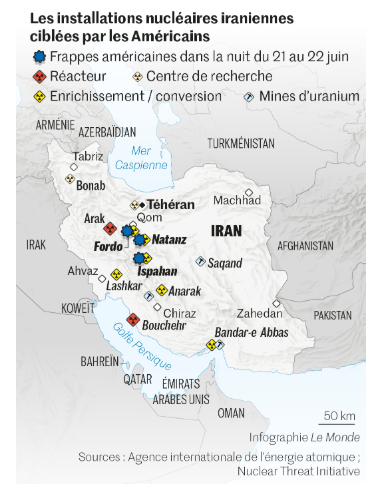
On June 13, Israel launched a series of airstrikes against Iranian nuclear facilities. These operations were joined on June 22 by the United States, targeting Natanz (a uranium enrichment site previously hit by the Israeli air force), Isfahan (where large stockpiles of fissile material were reportedly stored), and Fordow (a uranium enrichment plant buried 90 metres beneath a mountain).
5. Where does visibility stand today?
The JCPOA officially reached its date of expiration in October 2025.
The IAEA now has zero visibility into Iran’s nuclear material inventories, including its highly enriched uranium. Without this monitoring, the agency can establish neither the exact location of enriched uranium stockpiles, the true extent of the damage caused by the airstrikes, nor whether any equipment has been diverted.
6. Frequently asked questions
What is the JCPOA and why was it signed in 2015?
The Joint Comprehensive Plan of Action (JCPOA), commonly known as the Iran Nuclear deal, was signed in 2015 by Iran and the P5+1 nations (the five permanent members of the UN Security Council plus Germany). After more than ten years of diplomatic negotiations and multiple economic sanctions, it aimed to limit Iran’s uranium enrichment capacity and extend its nuclear weapon breakout time to at least one year, in exchange for the lifting of financial and economic sanctions.
Why did the JCPOA collapse and what happened after the US withdrawal?
The United States withdrew from the JCPOA in 2018 following Donald Trump’s accession to the presidency. By 2019, Iran had already exceeded authorized enrichment limits and stockpile thresholds, and resumed activities at the Fordow facility. From 2021, Iran also stopped allowing IAEA inspections at undeclared sites, further eroding international oversight of its nuclear programme.
What enrichment level is required to produce a nuclear weapon?
Military-grade nuclear applications require uranium enriched to approximately 90%. By contrast, commercial civilian power reactors use uranium enriched to between 3% and 5%, while research or naval reactors may use enrichment levels up to 20%. Uranium enriched below 20% is classified as “low-enriched” under international standards monitored by the IAEA.
What is the IAEA’s current visibility into Iran’s nuclear programme?
Following the expiration of the JCPOA in October 2025 and the breakdown of inspection access, the IAEA now has zero visibility into Iran’s nuclear material inventories, including its highly enriched uranium. The agency is unable to determine the exact location of enriched uranium stockpiles, the true extent of the damage caused by the 2025 airstrikes, or whether any nuclear equipment has been diverted.